What The Roadless Rule Does For Big Sky
Montana contains 6.4 million acres of roadless land under the 2001 federal rule that restricts road construction and logging on national forest land. This rule designation includes much of the backcountry surrounding Big Sky. With this land at risk, it is important to consider how it might affect our small mountain community.
Want to make a public comment about this? Check out our public comment template at the bottom.
What Is The Roadless Rule
The Roadless Rule is a U.S. Forest Service policy that was created in 2001. The rule prohibits new road construction and large scale commercial timber harvesting on 45 million acres of undeveloped national forest land.
What Is Currently Happening With The Roadless Rule
On August 18th, the USDA announced a plan to eliminate the roadless rule. The USDA released a proposed rule and draft environmental impact statement that would reduce regulatory burden and return land management decision making for inventoried roadless areas to local Forest Service officials. A public comment period is currently happening, with public comments needed by October 6th.
What Does This Mean For Big Sky
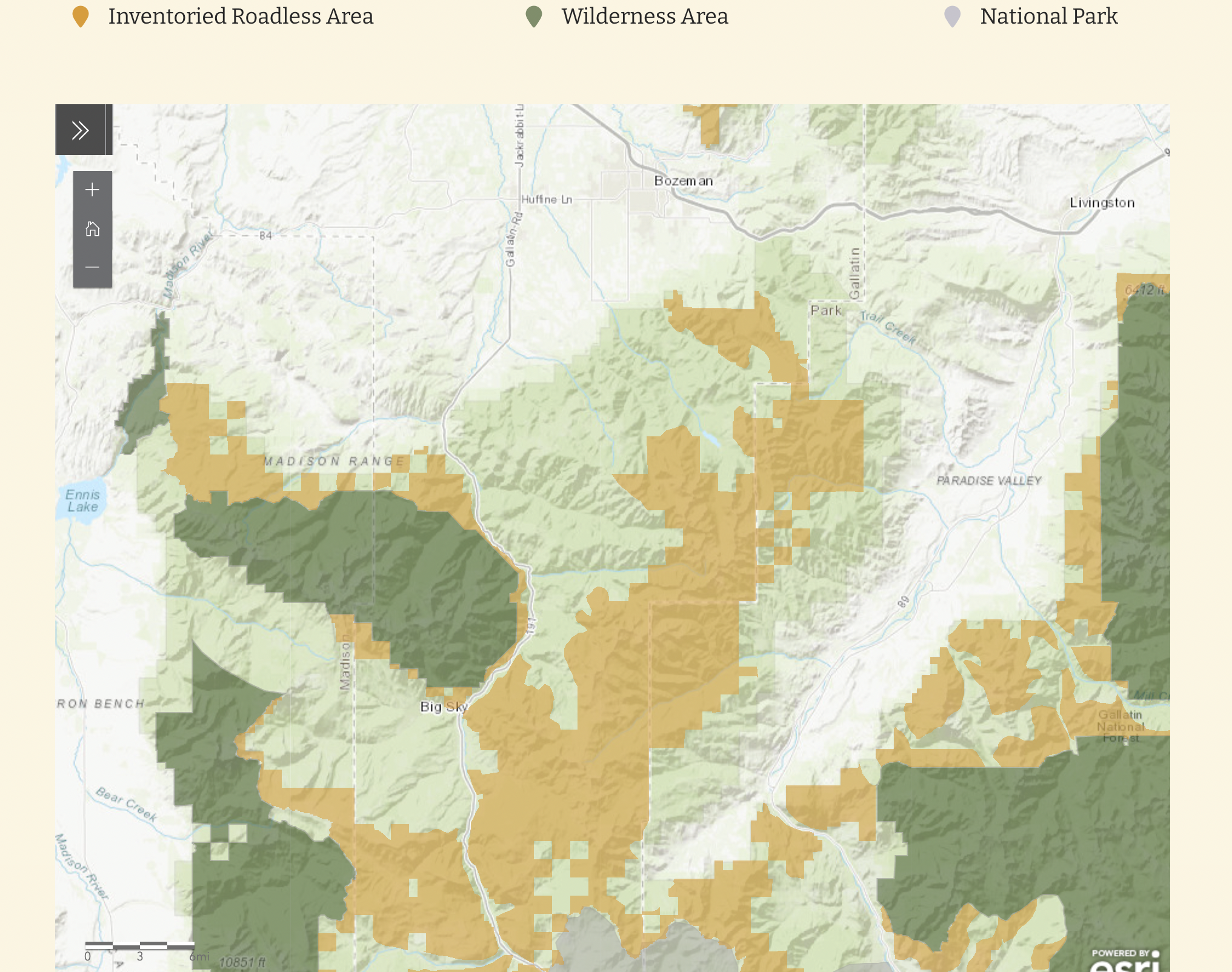
"Map of Roadless Areas," Wild Montana, wildmontana.org/roadless-rule/
This rule impacts Big Sky significantly, as surrounding roadless areas include Custer Gallatin National Forest, Beaverhead-Deerlodge National Forest, and Lee Metcalf Wilderness, all areas that we use for necessities such as clean water, hunting, and recreation. Lee Metcalf Wilderness is already designated as a Federal Wilderness Area, which grants it the highest tier of statutory protection available under the Wilderness Act of 1964, so this will not be affected by a change to the roadless rule. The National Forest, however, is not protected to the same degree. Our primary concerns when assessing the proposed changes are wildfire, wildlife, water: overall ecosystem health.
How Does The Rule Impact Fire Mitigation
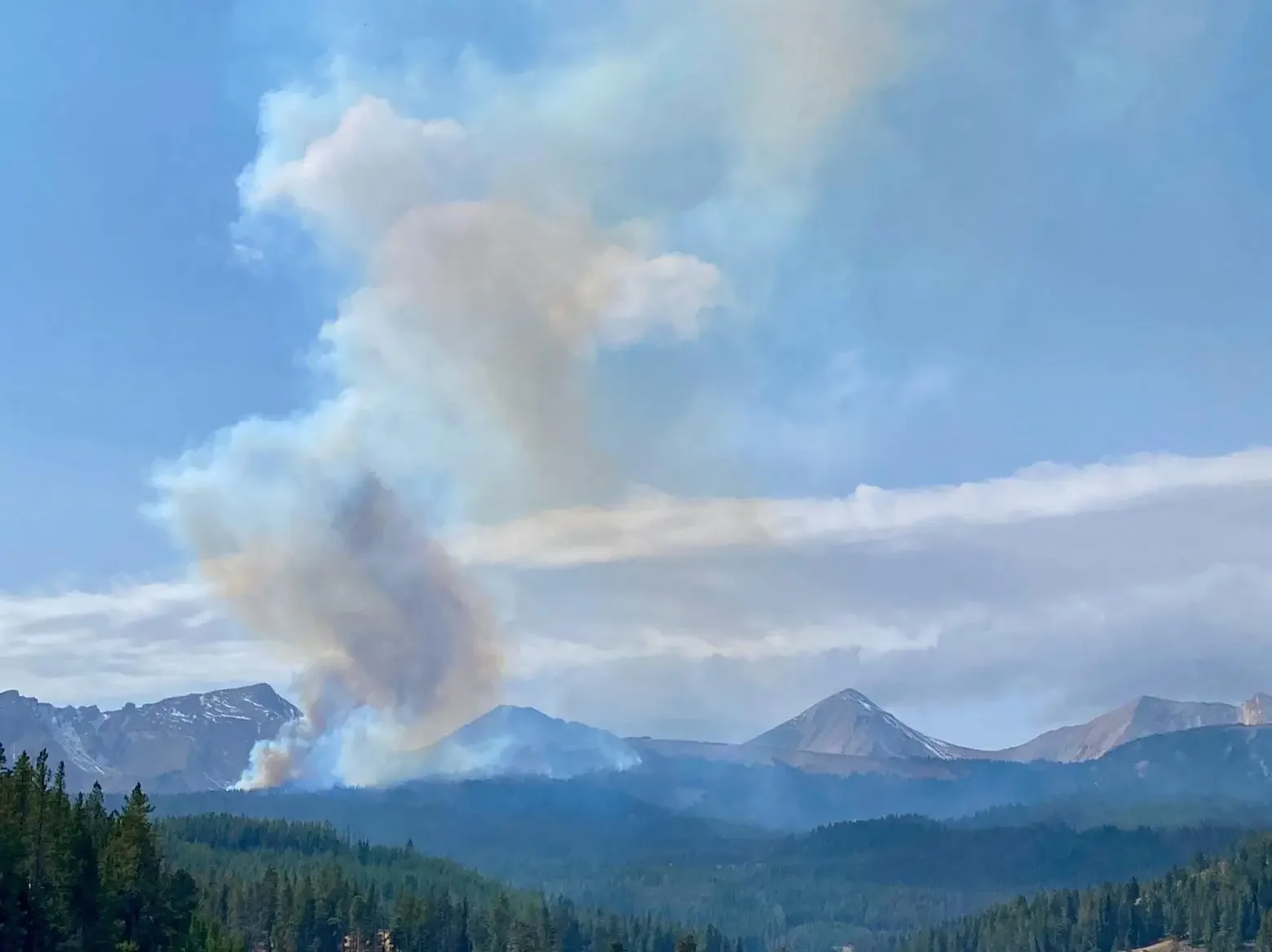
Fire mitigation is one of the most pressing concerns in the Mountain West, and it weighs heavily in our own community when it comes to the Roadless Rule. We understand the argument that road access and thinning make wildfire prevention easier, and we take that concern seriously. It's worth noting that the rule already accounts for this: it includes specific provisions allowing for wildfire suppression, prescribed fire, and certain thinning and habitat restoration work within roadless areas.
How Does The Roadless Rule Impact Wildlife And Water Quality
Connectivity across these entities is essential for a healthy ecosystem, particularly for our water and wildlife. 34% of Montanans get clean drinking water from roadless areas, which purify water at no cost. Roadless areas also provide secure habitat during hunting season that keeps big game on public land where they are accessible to hunters in top hunting areas. 93%of elk summer range in Montana is found within roadless areas.
How To Take Action
As the Forest Service reviews this proposed rule, public comment is one of the few direct ways we have to weigh in and make sure our concerns about eliminating the Roadless Rule are part of that record. A comment period is currently open to the public. Public comments are accepted at https://www.regulations.gov/commenton/FS-2025-0001-223869 and can be made until October 6th at 11:59 PM EDT. Check out the United States Government’s guide on effective public commenting. Many nonprofits, organizations, and individuals are participating in this comment period, and you can check out their public comments HERE.
Copy And Paste This: A Public Comment Template For You
I am writing as a resident of Big Sky, Montana, to urge the U.S. Department of Agriculture to reconsider its proposal to fully eliminate the 2001 Roadless Rule. If finalized, this would pose a direct threat to my community.
Big Sky's wildfire risk is already higher than 96% of communities in the United States. Building more roads into currently roadless national forest land could create an increase in wildfire danger for us. 85% of wildfires are human caused, and are 4x more likely to occur near roads than in roadless areas. Therefore, constructing more roads would significantly increase wildfire danger for my community.
The Roadless Rule also protects our water. 34% of Montanans get clean drinking water from roadless areas, which filter and purify that water at no cost to taxpayers. The Gallatin River Watershed and Madison River Watershed are both watersheds that Big Sky relies on, and are both in roadless areas. Connectivity across these entities is essential for a healthy ecosystem, particularly for our water.
Rolling back this rule would trade a free, working system of fire resilience and water filtration for more roads, more ignition sources, and more risk to a community that is already among the most fire vulnerable in the country. I ask the Department to withdraw this proposal and keep the 2001 Roadless Rule intact.