


Plans and Reports
Big Sky Community Climate Action Plan
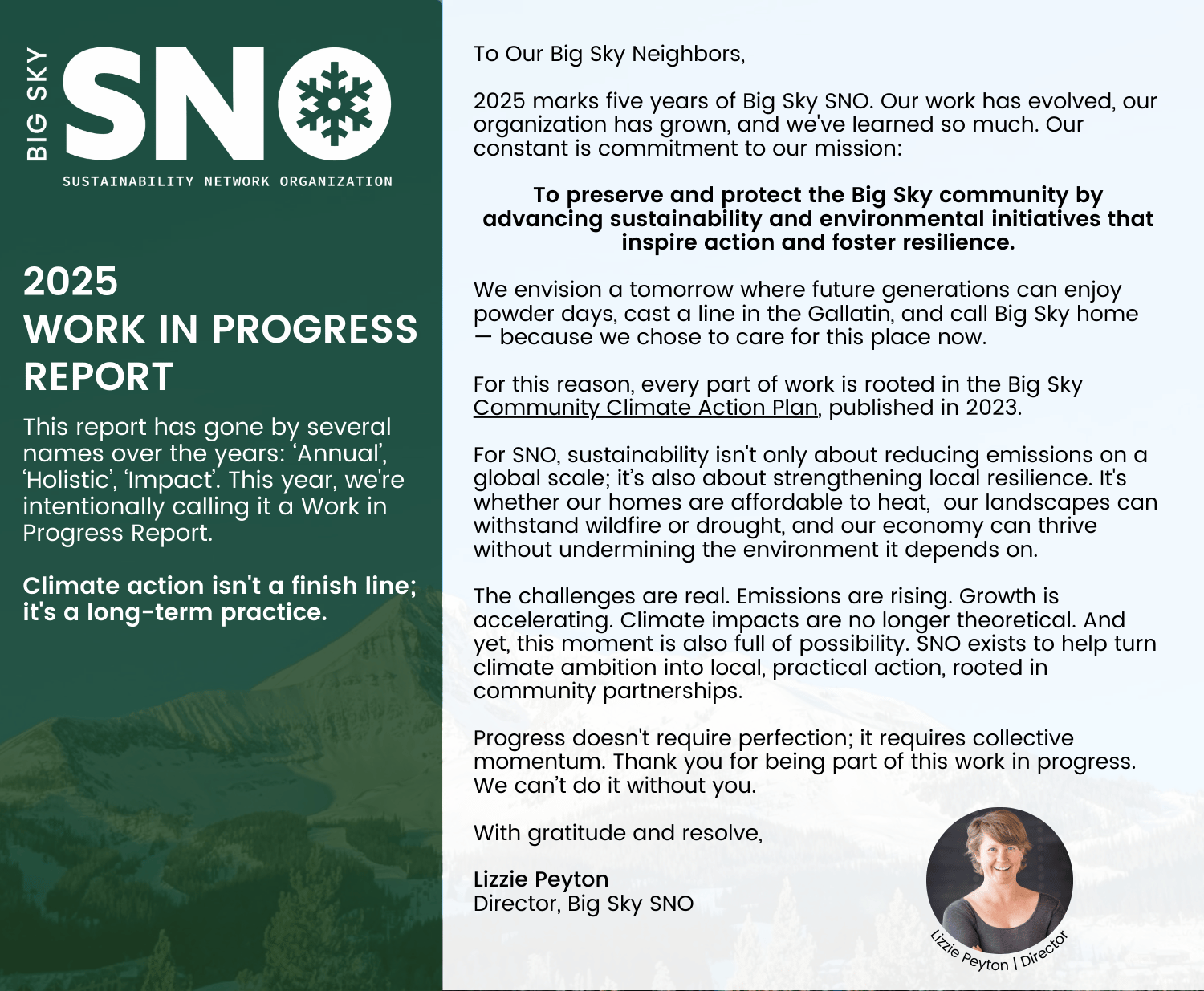
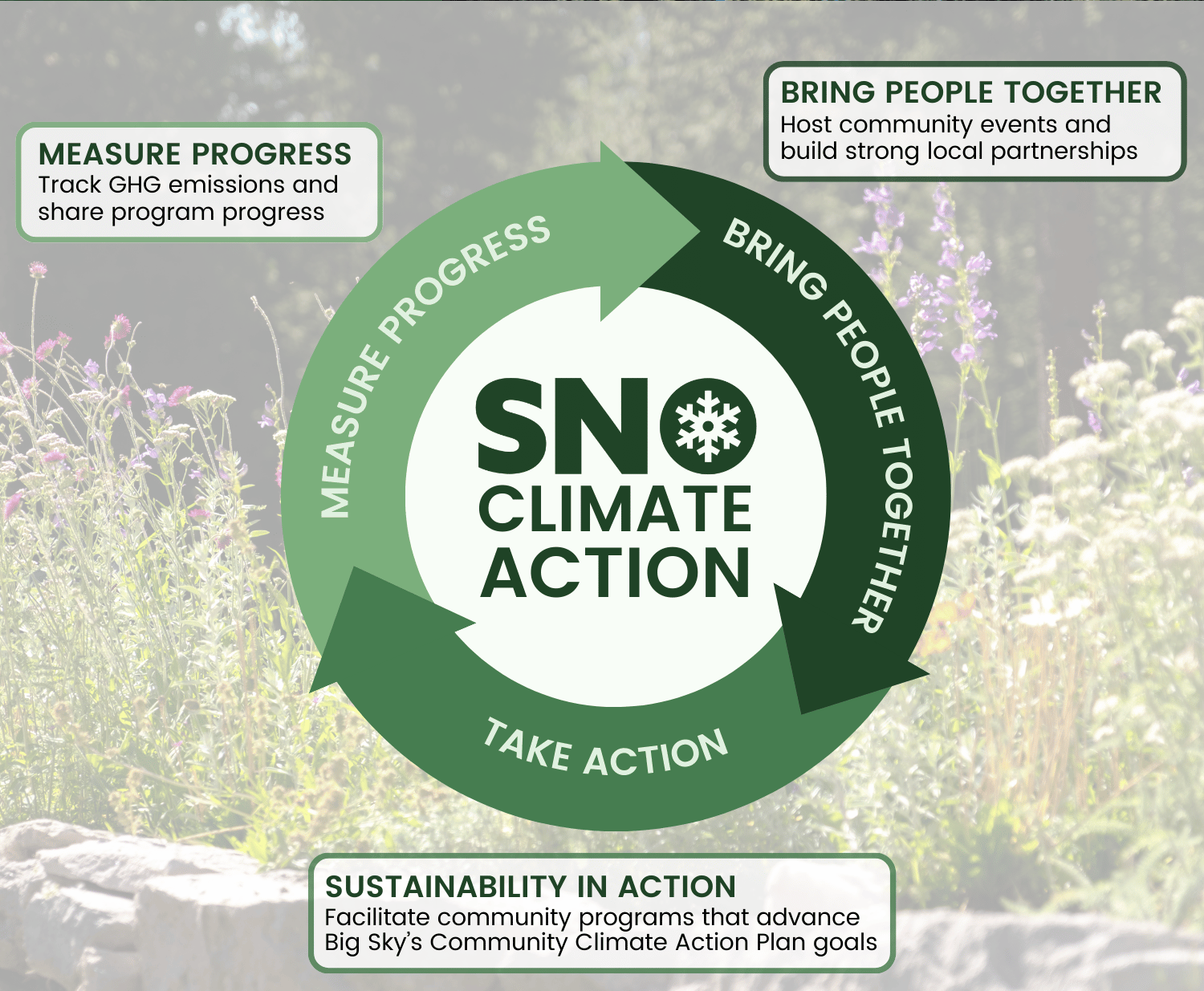
Published in 2023, Big Sky’s Community Climate Action Plan (CAP) outlines practical, adaptable strategies to reduce greenhouse gas emissions and strengthen community resilience, with clear milestones for 2035 and a path to net-zero emissions by 2050. Serving as Big Sky’s long-term roadmap for climate action, the CAP guides all of Big Sky SNO’s work.
The plan was developed in partnership with 30+ local stakeholders, including the public utility, environmental and social nonprofits, civic organizations, resorts, major landowners and developers, private contractors, renewable energy companies, and engaged community members. Achieving these goals will require collective action. We can’t do it alone; every individual, business, and organization has a role to play in reaching Big Sky’s climate goals.
2025 Work In Progress Report
Over the years, this report has been called Annual, Holistic, and Impact. This year, we’re intentionally calling it the Work in Progress Report, because there isn’t a finish line to climate action. It’s a long-term practice, shaped by learning, collaboration, and the collective steps we take together.
2023 Big Sky Waste Composition Assessment
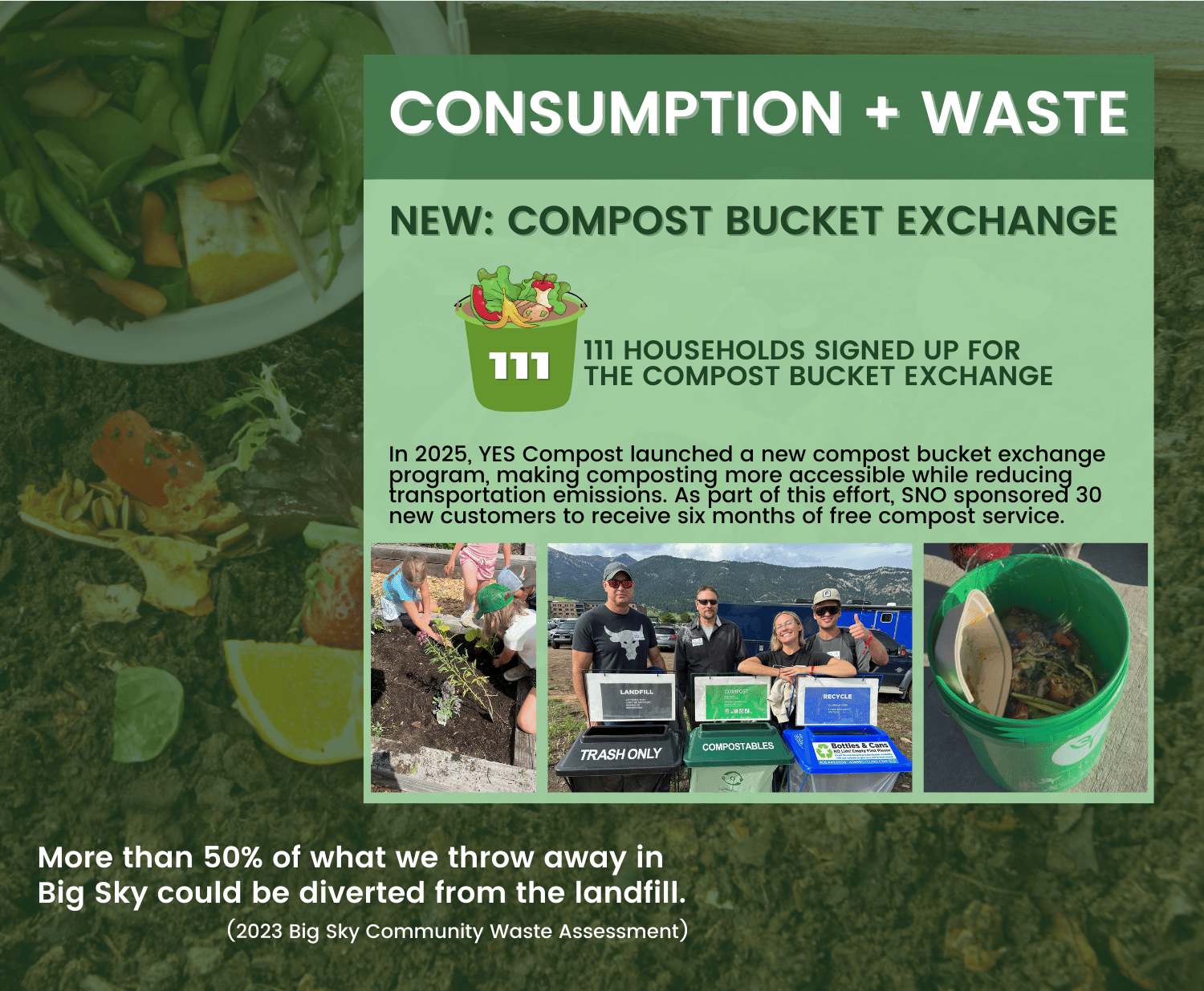
The Big Sky Community Waste Composition Assessment analyzed the amount and makeup of the community’s municipal solid waste stream. Using annual tonnage data from local haulers and 10 waste audit days, the assessment examined approximately 7,700 pounds of trash from four community sectors. Materials were sorted into 30 categories to better understand what makes up Big Sky’s waste by weight.
Partners: BSRAD, Moonlight Community Foundation, Rieschel Foundation, Republic Services, Gallatin County Solid Waste
Community Greenhouse Gas Inventory Reports
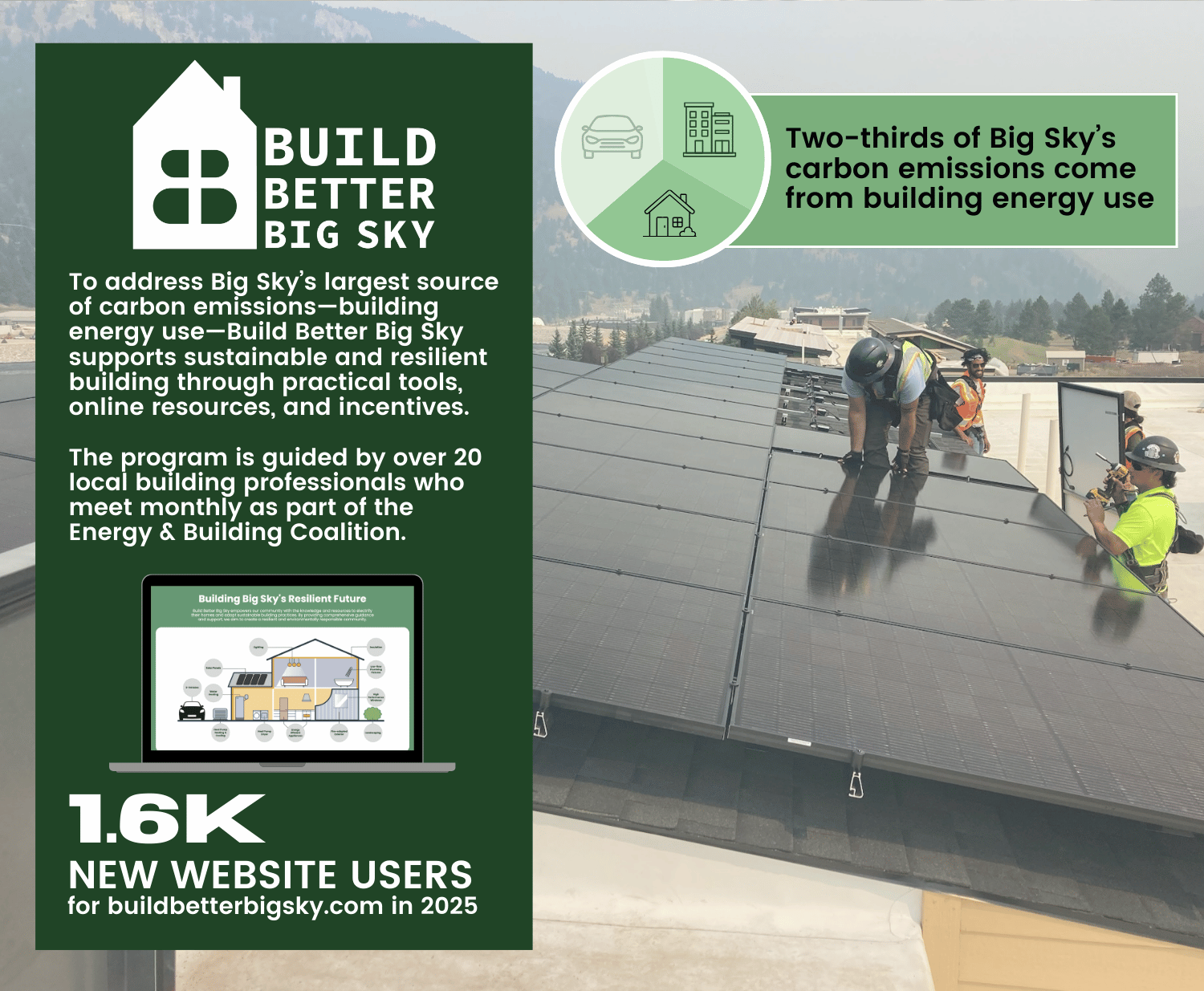
Big Sky SNO completes community-wide greenhouse gas (GHG) inventories every three years to better understand emissions across the Big Sky community. These inventories are conducted using ICLEI (Local Governments for Sustainability) software and standards, which align with national and international emissions accounting methodologies and are currently used by 38 mountain towns across the western United States.
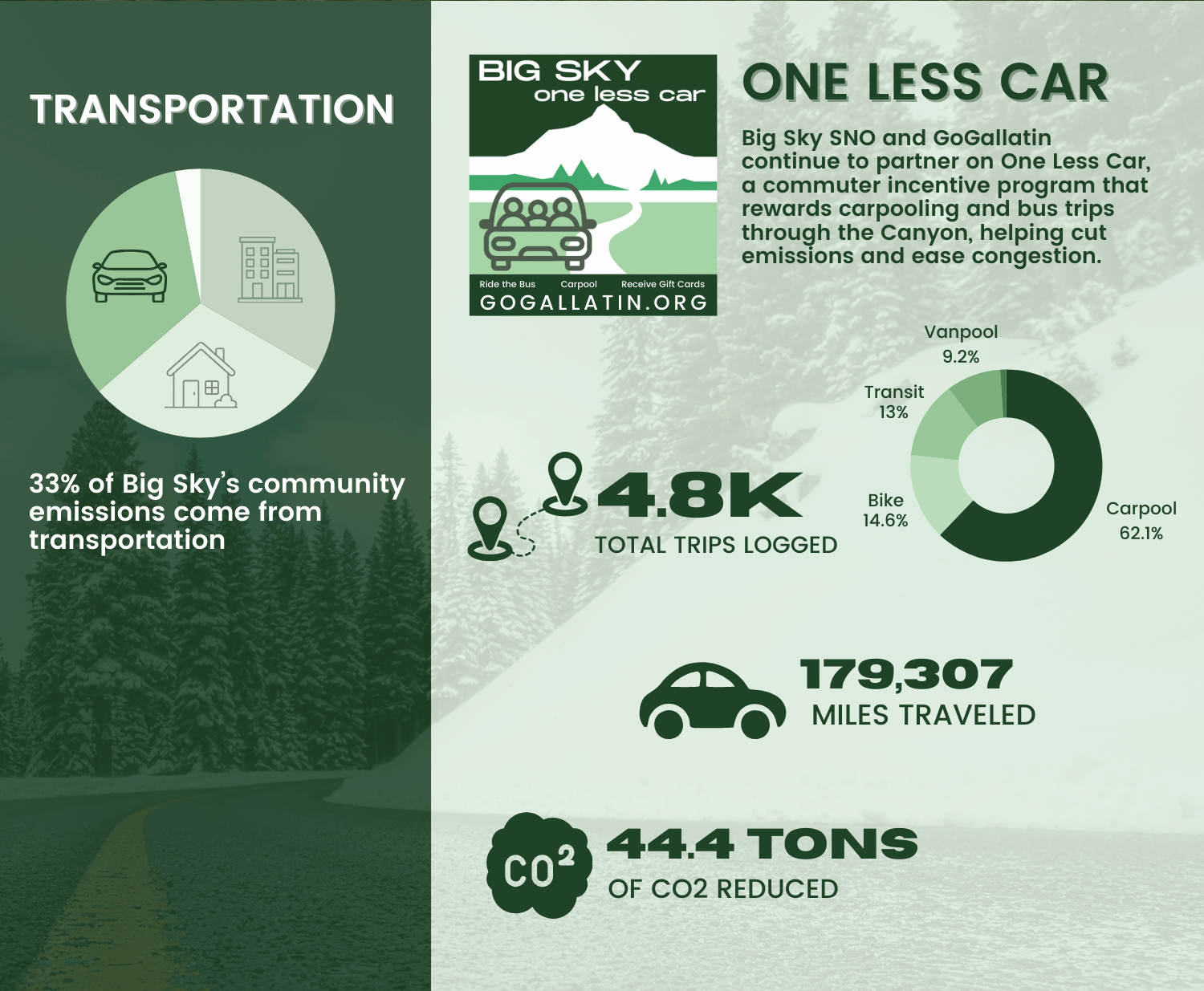
The inventories quantify emissions from electricity and propane use, transportation (cars, trucks, and buses), and solid waste disposal. The results highlight an urgent need for the Big Sky community to:
Set priorities through community engagement
Focus on the most effective GHG reduction strategies
Quantify community energy and cost savings
Track emissions over time
Collaborate with other mountain towns to identify best practices for resort communities
Partners: Various community organizations
